

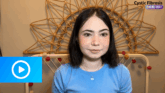




Jen Chamberlain shares what it’s like to parent a young child with cystic fibrosis during the holidays — from balancing treatments and travel to learning when to say no. She reflects on risk-taking, preparation, and the importance of giving yourself grace through a demanding season.
Transcript
My name is Jen Chamberlain. I have two kids. I have a 9-year-old boy and a 6-year-old little girl who has cystic fibrosis.
So the holiday season can be a really overwhelming time for many people, but especially CF parents.
I would say that typically our time management and risk analysis has to be on point all the time, but especially so during the holiday season. And I say that because it tends to be a busier time of the year.
And here in the U.S., it also tends to be a time of year where there’s more viruses going around, more indoor events, more events with more people, large events. And a lot of that kind of turns on how she’s doing health-wise as well.
So if she is in a good spot health-wise, we might take more risks. We may be comfortable with more situations in terms of large group events. If she’s not doing well, like she’s been consecutively sick or on antibiotics a lot, we might tend to say no to big events.
And then when we do go to events, it’s a time management issue because, as we know, CF is a very time-consuming disease. Our daughter does two breathing treatments a day, and that’s every day, holidays included.
So, you know, if there is a family gathering on a holiday and we’re traveling or going in between houses, we have to figure out when we’re going to fit treatment in. If we’re going to need to transport treatment. Do we have all the medications?
Which also I think bleeds into being prepared in the holiday season. So if you are traveling, you have to make sure you have enough medications. So a lot of that involves dealing with pharmacies, dealing with insurance, to get overrides in case you know, your insurance isn’t ready to fill a particular prescription, you have to plan ahead a lot more than the typical person.
As a caregiver, and I’m six years into it now, my daughter’s 6, you know, and we’ve gone through six holiday seasons. In the beginning, I had a lot of difficulty saying no to things, like saying no to going to events, because it wasn’t in my nature.
We were a pretty social family, and my daughter was born right before COVID and she was born with cystic fibrosis. So our family dynamic about holiday gatherings has changed considerably.
And I would say saying no to events, I’ve gotten a lot more comfortable with. So I think that’s actually a way to protect your mental health and to protect your child’s health sometimes. So I think learning when to say no and when being comfortable with that decision and, you know, living with that decision, is part of protecting yourself during this time of year.
It’s a really tricky thing to navigate, but I feel like the holiday season is a time where we have to remind those around us how important it is to protect our child’s health and to not overwhelm ourselves as caregivers.
I would say the biggest thing during the holiday season is to give yourself grace. To give yourself grace if you want to miss an event, to be OK with that, if you do choose to go to an event and your child gets sick as a result, you got to give yourself grace, too.
I know that that’s a thing that tends to happen is, you know, if you make that decision to go to that party and then your kid gets sick a few days later, you can feel really guilty as a parent.
So I think giving yourself grace, following your intuition, following your gut about what decisions you’re making. It sounds kind of dramatic, but in a way, it’s like every decision we make as CF caregivers could potentially impact our child’s health. So, you know, that becomes a little more stressful around the holiday time.
So I think just giving yourself grace, making sure you’re taking care of yourself, getting sleep, drinking water, those basic things, becomes so necessary when things can spiral out of control with the busyness, the plans, the chaos that surrounds the holidays.