New gene-editing tool models and corrects cystic fibrosis mutations
Precision A3G editor reduces unintended nearby DNA changes in cells
Written by |
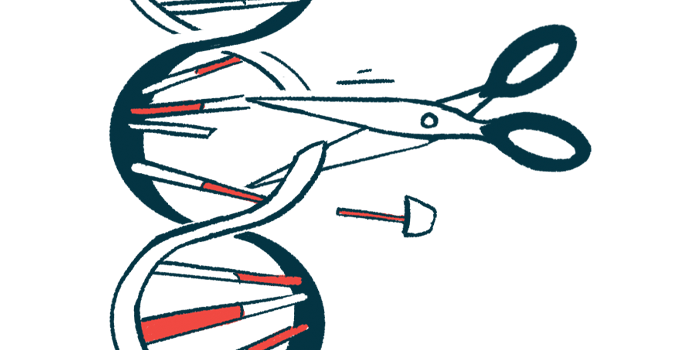




Scientists have developed a more precise version of a gene-editing tool, showing that it can correct mutations that cause cystic fibrosis (CF) in cell models and also introduce CF-causing mutations into cells for research.
“We were able to introduce specific cystic-fibrosis mutations into human epithelial cells relevant to the disease, generating cell models that will improve our understanding,” Gang Bao, PhD, study co-senior author at Rice University, said in a university news story. “We were also able to reverse those mutations and show improved cellular functions using the same editor, demonstrating the level of pinpoint gene-editing control this technology now offers and the potential of base-pair editors to treat the disease.”

Researchers refine base editor to improve accuracy
The study, “Precision A3G base editors for disease modeling and correction,” was published in Molecular Therapy. The work was funded by the National Institutes of Health and the National Science Foundation.
CF is caused by mutations in the CFTR gene. The basic idea of gene-editing therapies for diseases such as CF is to alter the genetic code within a patient’s cells, removing the mutation much like correcting a spelling error in a document.
Scientists are actively working to develop gene-editing tools for CF. A major challenge is that specific gene-editing tools are usually best suited for correcting certain types of mutations. Because many different mutations in the CFTR gene can cause CF, different patients may ultimately require different molecular tools depending on their specific mutation.
“More than a thousand different genetic mutations can cause cystic fibrosis. The fact that different mutations require distinct corrective tools highlights the importance of precision medicine,” said Xue “Sherry” Gao, PhD, co-senior author of the study at the University of Pennsylvania.
There are four main building blocks of DNA: thymine (T), adenine (A), guanine (G), and cytosine (C). In some CF-causing mutations, there is a C where there should be a T. This substitution “can impair or completely abolish the function of the gene, leading to disease,” said Tyler C. Daniel, co-first author of the study at Penn Engineering.
How A3G base editors target specific DNA letters
In the study, the researchers were working with gene-editing tools called A3G-BEs, which are designed to switch the C back to a T.
A3G-BE gene editors work by recognizing a particular DNA sequence: when there are two Cs in a row, the editor changes the second C to a T. A drawback of this approach is that there are many places in the normal genetic code where two Cs appear together. It has been difficult to tailor A3G-BE editors so they correct a disease-causing mutation without altering nearby healthy Cs.
“It’s a bit like editing a document,” Gao said. “We can already identify and replace a particular letter in a specific word. How do we change only that one letter without accidentally altering the letters next to it?”
A3G-BE gene editors contain two main parts: one part that binds to the DNA sequence, and another that alters the DNA. A flexible molecule called a linker connects these two pieces, similar to a leash connecting a dog to its owner. The researchers found they could improve the precision of their editors by making the linker shorter.
“We essentially tightened the leash to ensure only our target was edited,” Daniel said.
Tightening the molecular “leash” boosts accuracy
This linker shortening, paired with other modifications to alter how the editors bind to DNA, decreased unintended bystander edits by more than 80% while maintaining the ability to correct CF-causing mutations. In cell models, the researchers showed they could use their new editing technology to both introduce and correct CF-causing mutations, with minimal unintended nearby edits. In human airway cells, precise editing modulated CFTR mRNA levels, protein expression, and channel function.
These findings support the new high-precision A3G-BE editors “as powerful tools for modeling and treating cystic fibrosis and other human diseases,” the researchers wrote. The researchers added that this molecular technology could also help improve understanding of other genetic diseases.
“The ability to precisely model disease-causing mutations gives us a much clearer window into how those mutations behave, including how they might respond to different therapies,” Gao said. “That kind of insight is essential for moving toward more personalized approaches to treating genetic disease.”