
Lung MRI may help spot early CF lung disease without radiation
Study found gas trapping on scans in some with normal lung function results
Written by |
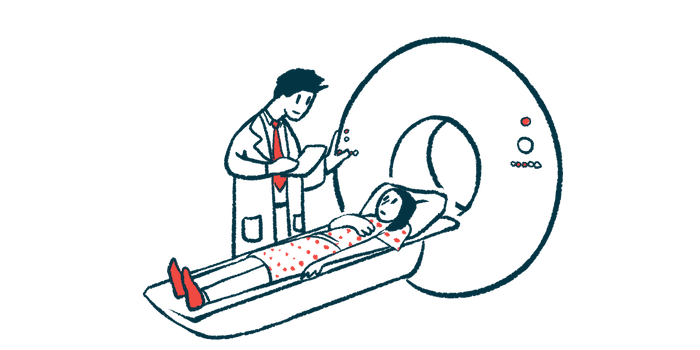




MRI images when a patient exhales may help detect and quantify areas presumed to reflect gas trapping — an early sign of lung disease — in people with cystic fibrosis (CF), including some patients with normal results on standard lung function tests, a study found.
The imaging method also showed more presumed gas trapping in adults than in children with CF, and in patients with impaired lung function in standard tests. Importantly, MRI showed gas trapping in nine of 14 patients with normal results on two standard lung function measures, suggesting it may help identify early lung changes before some standard tests detect abnormalities.
“Our approach addresses the clinical need for a non-ionising alternative to CT for imaging gas trapping that is suitable for paediatric imaging and potential longitudinal assessment,” they wrote. “Our approach does not require specialist hardware or trained personnel and is simple and sensitive for gas trapping.”

Study tests MRI during exhalation
The study, “Expiratory lung MRI: a simple, sensitive method to quantify and visualise regional gas trapping in cystic fibrosis,” was published in the Journal of Cystic Fibrosis.
CF is caused by genetic mutations that result in the loss or dysfunction of the CFTR protein, leading to the accumulation of thick, sticky mucus in various organs, particularly in the lungs. This blocks airflow and causes lung inflammation, leading to respiratory symptoms such as shortness of breath and a persistent cough.
Early detection of lung disease is crucial for people with CF, as timely treatment may prevent irreversible lung damage and result in better outcomes. A hallmark of early lung disease is gas trapping, the abnormal retention of air in the lungs, which can be assessed using a CT scan. However, due to ionizing radiation, CT use is limited in children.
Here, researchers in the U.K. evaluated the alternative use of lung MRI to visualize and quantify areas presumed to reflect gas trapping. For that, they retrospectively analyzed data from 20 adults and seven children (ages 8 to 12 years) with CF, and nine adults and 15 children who served as normal controls. The CF patients had a median age of 17.4 years, and most were female (59.3%).
Lung function was assessed by measuring the forced expiratory volume in one second (FEV1), the ratio of residual volume (the air that remains in the lungs after a complete exhalation) to total lung capacity (the maximum amount of air the lungs can hold), or RV/TLC, and the lung clearance index (LCI) — a measure of how long it takes a person to “clear” an inhaled tracer gas from their lungs.
Higher FEV1, the maximum amount of air exhaled in one second after a deep breath, indicates better lung function, whereas a higher RV/TLC ratio indicates greater air trapping, and a higher LCI may be a sign of early-stage lung disease.
FEV1 values and RV/TLC were within the normal range in 14 and 15 patients, respectively. All 14 patients with normal FEV1 also had normal RV/TLC values. LCI was also normal in seven patients with normal FEV1 and abnormal in all others.
Scans showed more trapped air in CF
In the controls, lungs appeared brighter and more homogeneous, as signal intensity on MRI was more evenly distributed. In contrast, in patients with mild disease, darker regions were presumed to correspond to gas trapping, which was even more evident in more severe CF.
Quantitative analysis revealed that CF patients had a significantly higher volume of gas trapping than controls (median 21.80% vs. 2.93%). Participants with abnormal FEV1 had significantly higher gas trapping volumes than patients with normal FEV1. In addition, adults with CF had significantly higher volumes than children with CF (46.54% vs. 12.07%).
In most patients, including all of those with abnormal FEV1 and nine with normal FEV1 values, the volume of gas trapping exceeded the upper limit of normal, defined as 7.01%.
Further analysis revealed that a higher gas trapping volume was associated with higher RV/TLC and LCI. By contrast, a higher gas trapping volume correlated with worse lung function, as assessed with FEV1.
“The MRI sequence used is widely available, and the breath-hold approach is quick and feasible in children [older than] 5 years. This supports the feasibility of our approach for clinical implementation in the routine assessment for early lung disease in [people with CF],” the investigators wrote.
They added that ongoing studies using this approach include more participants and mentioned plans to evaluate whether this could be helpful to track disease progression. The researchers noted that low MRI signal may have causes other than gas trapping, so future studies are needed to validate the approach.



Leave a comment
Fill in the required fields to post. Your email address will not be published.